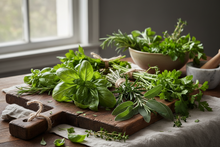
Sage - Fresh Cut
- $6.00
- $6.00
- (-0%)
- Unit price
- per
Fresh sage is savoury and faintly musky, with a velvet leaf that crisps beautifully in butter.

Refrigerate in a loose bag for a week to ten days. Chiffonade the leaves for raw use, or fry whole leaves thirty seconds in butter until they stop sizzling. Stands up to long braises.
- Grown in: Lineville, Alabama (no pesticides)
- Freshness: Harvested at peak and sold fresh
- Availability: Seasonal - local Alabama delivery & pickup
- Storage: Loose bag in the crisper - 7 to 10 days
- Light: Grown in full sun with good air movement around the plants
- Water: Grown on infrequent deep watering; sage rots in ground that stays damp
- Soil: Grown in lean, well-drained soil and spaced wide, because the combination of Alabama humidity and wet foliage is what takes sage out. Air around the plant matters as much as drainage under it.
- Feeding: A light feed in early spring and nothing after - sage fed hard through summer goes leggy and loses its edge.
No hardiness zone on this one — it's harvested and sold to eat, not to plant. If you're after the plant itself rather than the crop, check our starters and herb plants.
What is the best thing to do with fresh sage?
Fry it. Whole leaves dropped into hot butter or oil for ten to fifteen seconds go crisp and turn from musty to nutty, and the butter they leave behind is the point as much as the leaves.
How much fresh replaces dried?
About three times the volume, but dried sage is a different, dustier thing. Fresh is cleaner and more eucalyptus-like, and it needs less cooking to soften.
Can I use the stems?
The tender upper stems, yes - chop them with the leaves. Lower woody stems are best dropped whole into a stock or under a roasting joint and removed later.
Does it work raw?
Sparingly. Raw sage is assertive and slightly furry in texture. A very fine chiffonade over squash or beans works; a handful in a salad does not.
Alabama only. This one is picked fresh and never leaves the state.
Where it goes
Local delivery and farm pickup within Alabama. We don't ship produce, microgreens, cut herbs or edible flowers out of state — they're picked at peak and wouldn't survive the trip.
What it costs
$9.95 local delivery, free over $75.
Pickup
Free at the farm in Lineville, or find us at the Clay County and Acworth farmers markets.
When
Cut to order. We'll reach out to set a delivery or pickup time, usually within a day or two of your order.
Refrigerate on arrival. Fresh items are best within a few days.
Alabama only. This one is picked fresh and never leaves the state.
Where it goes
Local delivery and farm pickup within Alabama. We don't ship produce, microgreens, cut herbs or edible flowers out of state — they're picked at peak and wouldn't survive the trip.
What it costs
$9.95 local delivery, free over $75.
Pickup
Free at the farm in Lineville, or find us at the Clay County and Acworth farmers markets.
When
Cut to order. We'll reach out to set a delivery or pickup time, usually within a day or two of your order.
Refrigerate on arrival. Fresh items are best within a few days.
Why we only ship Mondays and Tuesdays
A plant in a dark box is on a clock. Shipping early in the week means it reaches you before the weekend instead of sitting in a warehouse from Friday to Monday. It costs us a day or two of lead time and saves a lot of plants.
Practically: an order placed Wednesday, Thursday, Friday or over the weekend goes out the following Monday. We'd rather tell you that now than let you find it in a tracking number.
How long it takes once it leaves
Typical ground transit from Lineville, Alabama after the ship day. Estimates, not guarantees — weather and carrier backlogs happen.
- 1–2 days Alabama, Georgia, Tennessee, Mississippi, Florida, South Carolina, North Carolina, Louisiana, Arkansas, Kentucky
- 2–3 days The rest of the Southeast and Midwest, Texas, the Mid-Atlantic and the Northeast
- 3–5 days The Plains, the Mountain West and the West Coast
Tracking is emailed the moment your box is scanned.
If something arrives unhappy
A little leaf drop or travel stress is normal and usually sorts itself out within a week or two of settling in. If a plant arrives genuinely damaged, email support@wadegreens.com within 48 hours of delivery with a photo of the plant and the box, and we'll make it right.
Plant Traits
The facts that decide whether it takes root, in the order that matters.
Sunlight
Full Sun (6+ hrs)
Six or more hours of direct sun. With less it stretches toward the light and flowering thins out.
Water
Moderate
Water when the top inch of soil is dry. Evenly damp, never standing wet.
Mature Size
Under 1 ft
Where it settles once established. Plan the spacing for this, not for the size it arrives at.
Foliage
Herbaceous
Soft-stemmed. It dies back to the ground and returns from the roots — the top going brown is the plan, not a failure.
Works As
Edible Garden · Cut Flowers
Traits
- EdibleSome part of it is grown to be eaten. We grow without pesticides, so it needs nothing more than a rinse.
- FragrantVolatile oils released by warmth. Scent peaks in afternoon heat or at dusk depending on which pollinator the flower is built for.
- Deer ResistantDeer feed by scent first. Aromatic oils, fuzzy leaves and milky sap all read as "not food," so this gets browsed last — though a hungry herd in late winter will test anything.
- Pet SafeNo compound known to be toxic to cats or dogs. Any plant eaten in volume can upset a stomach — this means no known toxin, not a licence to graze.
Recently Viewed Products
- from $6.00
- from $6.00
- (-0%)
- Unit price
- per
- from $6.00
- from $6.00
- (-0%)
- Unit price
- per
- from $6.00
- from $6.00
- (-0%)
- Unit price
- per
- from $6.00
- from $6.00
- (-0%)
- Unit price
- per
- from $6.00
- from $6.00
- (-0%)
- Unit price
- per
- from $6.00
- from $6.00
- (-0%)
- Unit price
- per
- from $6.00
- from $6.00
- (-0%)
- Unit price
- per
- from $6.00
- from $6.00
- (-0%)
- Unit price
- per
- from $6.00
- from $6.00
- (-0%)
- Unit price
- per
- from $6.00
- from $6.00
- (-0%)
- Unit price
- per
Related Products
- from $6.00
- from $6.00
- (-0%)
- Unit price
- per
- from $6.00
- from $6.00
- (-0%)
- Unit price
- per
- from $6.00
- from $6.00
- (-0%)
- Unit price
- per
- from $6.00
- from $6.00
- (-0%)
- Unit price
- per
- from $6.00
- from $6.00
- (-0%)
- Unit price
- per
- from $6.00
- from $6.00
- (-0%)
- Unit price
- per
- from $6.00
- from $6.00
- (-0%)
- Unit price
- per
- from $6.00
- from $6.00
- (-0%)
- Unit price
- per
- from $6.00
- from $6.00
- (-0%)
- Unit price
- per
- from $6.00
- from $6.00
- (-0%)
- Unit price
- per
NEED SOME HELP?